
Classrooms nowadays are student-centred, collaborative, and dynamic. In this setting, the goal of discipline is to assist a youngster form lifelong habits rather than to in still fear or control. Discipline becomes more than just a written rule when educators and students develop a respectful relationship.
The relationship between students and teachers at TAIPS is crucial for directing behaviour, enhancing concentration, and fostering a supportive learning environment. Supported students are more likely to pay attention, participate, adhere to rules, and develop into responsible learners.
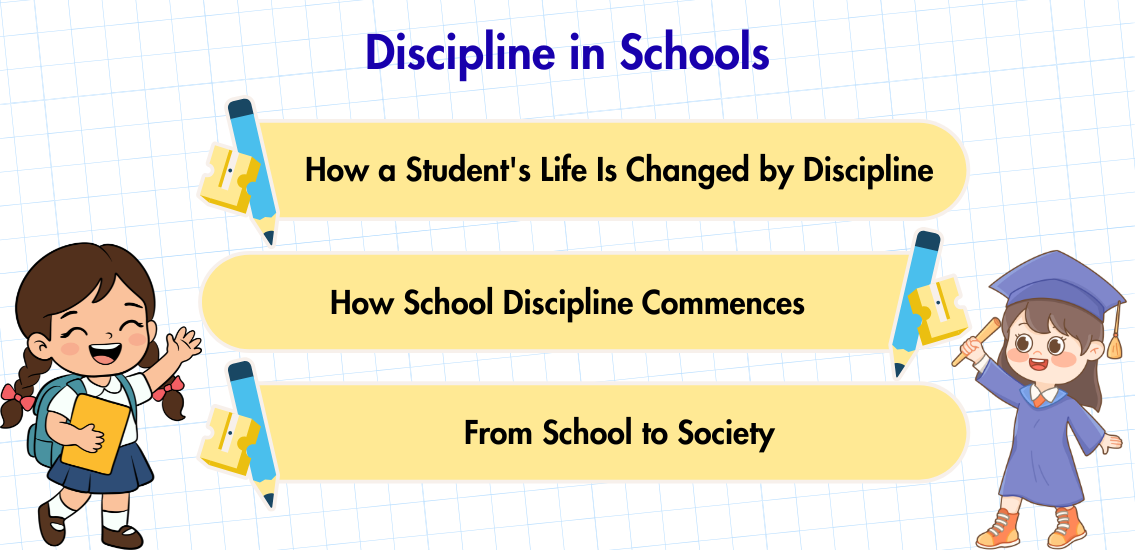
How a Student’s Life Is Changed by Discipline
A student’s behaviour, study habits, and reaction to difficulties can all be drastically altered by discipline. A well-behaved child learns to respect others, value time, finish tasks on schedule, and maintain commitment to objectives. These behaviours encourage achievement in family life, social life, and future employment in addition to academic accomplishment.
Students gain confidence and independence when they comprehend self-control. They discover that consistency, not last-minute effort, is what leads to advancement. That kind of thinking frequently serves as the basis for long-term success.
Teachers’ and Students’ Roles
Teachers serve as role models in addition to being instructors. By seeing teachers’ speech, demeanour, time management, and handling of responsibilities, students can learn
discipline. Children instinctively start to emulate teachers who exhibit patience, fairness, and structure.
Students also contribute to the culture of the classroom. The entire learning atmosphere is strengthened when students pay close attention, abide by the rules, and encourage one another. Healthy relationships between teachers and students foster trust, which facilitates the application of punishment.
How School Discipline Commences
Small, everyday routines are the foundation of discipline. Morning rituals, class schedules, courteous communication, and clear expectations all contribute to its development. When kids comprehend what is expected of them and why it matters, schools establish discipline.
Among the beneficial methods schools use to foster discipline are:
- Fair and uncomplicated guidelines for the classroom.
- Consistent attendance and timeliness.
- Teachers and students should interact with respect.
- Well-balanced academic schedules under appropriate supervision.
- Positive reinforcement for hard work and excellent behaviour.
• Tasks that impart responsibility, patience, and teamwork.
These exercises teach pupils that self-control is not a limitation. It is a system of assistance that maintains order and ease of learning.
From School to Society
The discipline that is taught in school does not remain in the classroom. It follows the pupil into the community. A youngster is more likely to grow up to be a responsible adult if they learn at school to respect time, people, and responsibilities.
This is among the main reasons why education is so important. They Mould behaviour, manners, and values in addition to teaching subjects. It is simpler for students to behave properly in the community, work well with others, and show respect at home when they adhere to school rules.
Stronger social behaviour is frequently the result of a strong school culture. Growing up in a disciplined setting typically makes students more conscious, courteous, and trustworthy in daily life.
Respect, consistency, and accountability are the cornerstones of a robust school culture. Discipline in schools becomes a life skill rather than a rule when educators and students collaborate with trust and consistency. According to TAIPS, school discipline fosters the development of better students as well as individuals who are prepared to make valuable contributions to society.