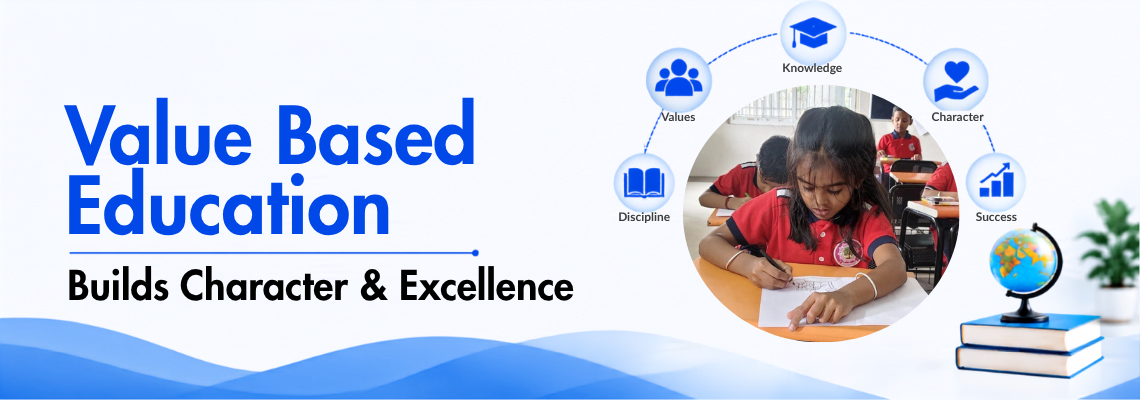
Today, Parents look for more than good grades when choosing a school for their child. They want an environment where their son or daughter learns honesty, respect, discipline, and empathy alongside mathematics and science. This blend shapes children who are not just knowledgeable, but also thoughtful and responsible.
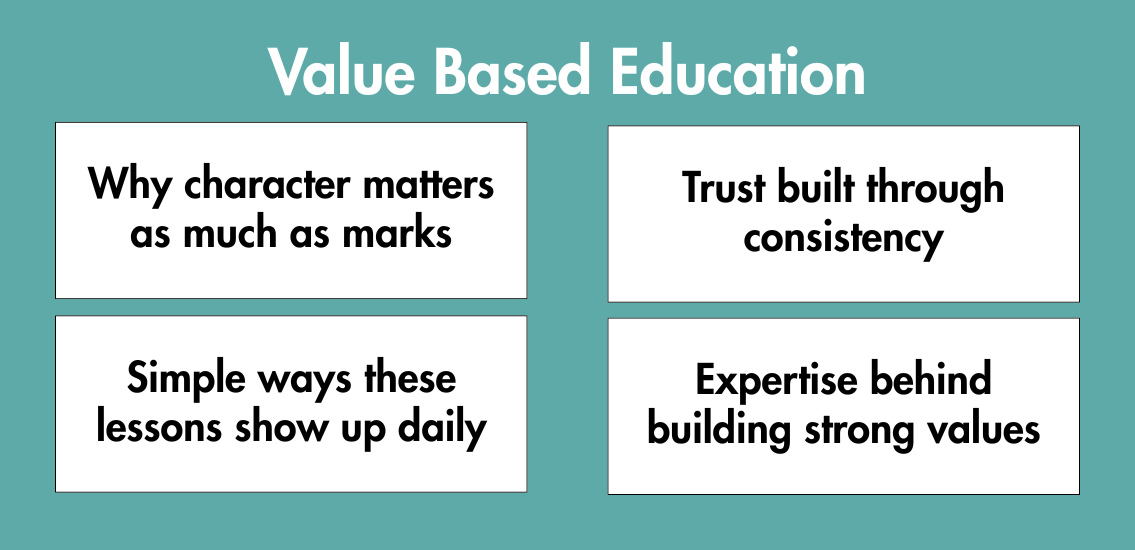
Why Character Matters as Much as Marks
A report card shows how well a student truly understands a subject, but it does not clearly show how they treat others, handle failure, or make decisions when no one is watching. Schools that give equal attention to character building prepare students for real life, not just exams. Children who learn patience, teamwork, and fairness in the classroom carry these qualities into their friendships, families, and future workplaces.
Our Experience Working with Students and Families
Over the years, teachers who work closely with children notice a clear pattern: students who are taught to respect their peers and take responsibility for their actions tend to perform better academically too. This is not a coincidence. A calm, respectful classroom allows every child to focus, ask questions freely, and learn without fear. Daily assemblies, moral lessons woven into subjects, and open conversations about kindness and honesty all contribute to this steady, visible change in how students carry themselves.
Expertise Behind Building Strong Values
Shaping character is not left to chance. Trained educators use group projects, community service, and reflection sessions to help students practise values in real situations rather than just hearing about them in a lecture. A group assignment teaches cooperation, while a debate on a social issue builds empathy and critical thinking. These methods are designed by experienced staff who understand how children absorb lessons best, through practice and example.
What Parents Often Ask
Many parents wonder if focusing on values takes away time from academic preparation. In practice, the opposite is true. A student who respects rules, manages time honestly, and stays disciplined during study hours usually performs more consistently than one who lacks these habits. Another common question is whether these lessons stay with children beyond school. Habits formed early, especially through daily practice rather than one-time lectures, tend to shape behaviour well into adulthood, influencing how a person handles work, relationships, and challenges later in life.
Trust Built Through Consistency
Trust between a school and a family grows when values are shown in daily practice, not just written in a mission statement. Teachers who lead by example, fair discipline that applies equally to every student, and transparent communication with parents all build this trust over time. When parents see their child return home more considerate, more organised, and more confident, it reinforces their confidence in the school’s approach. This consistency, repeated across years, makes character education credible rather than just a slogan.
Simple Ways These Lessons Show Up Daily
Small moments carry the biggest lessons. A student sharing lunch with a classmate, apologising after a disagreement, or standing up for a friend being teased are all quiet examples of values being lived out. Schools support this through morning assemblies with short life lessons, buddy programs pairing older and younger students, and regular recognition of good conduct rather than only academic achievement. These simple, repeated practices matter more than grand gestures because they become part of a student’s everyday thinking.
Preparing Students for Life Beyond the Classroom
The real test of any lesson is how it holds up outside school walls. Students who grow up practising honesty, respect, and responsibility are better equipped to handle setbacks, work in teams, and make sound decisions independently. These are the same qualities that employers, colleges, and communities look for later. A strong academic record opens doors, but character often determines how well a person walks through them.
Raising well-rounded children takes more than textbooks and test scores. A thoughtful value based education, built through daily practice, guided by experienced teachers, and trusted by families, helps students grow into individuals who are capable both in the classroom and in life. Schools that commit to this approach are not just teaching subjects; they are shaping the character that will guide their students for years to come.