Overview
Every notion that is not fully expressed stays tiny. For relationships to flourish, open communication is essential. Inexpressive behavior frequently results in missed opportunities. To achieve, one must be able to communicate what they know.
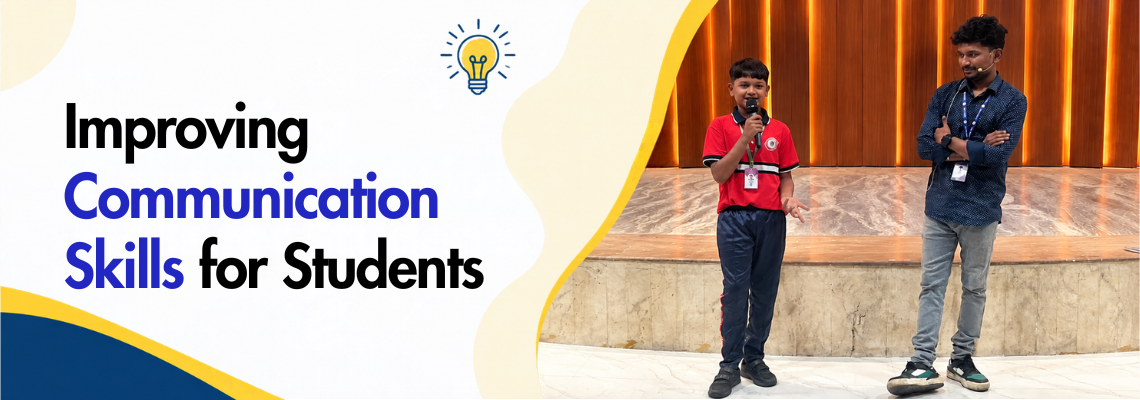
The same thing is true for students. Everything hinges on how well students are able to communicate. Self-confidence, social and work life, profession, everything improves with effective communication. Unfortunately, schools rarely cover communication as an academics area.
This isn’t the case with TAIPS. Knowing something is only half the battle, the other half is expressing it. Hence, at TAIPS, students are taught to express something through various methods beginning from kindergarten.
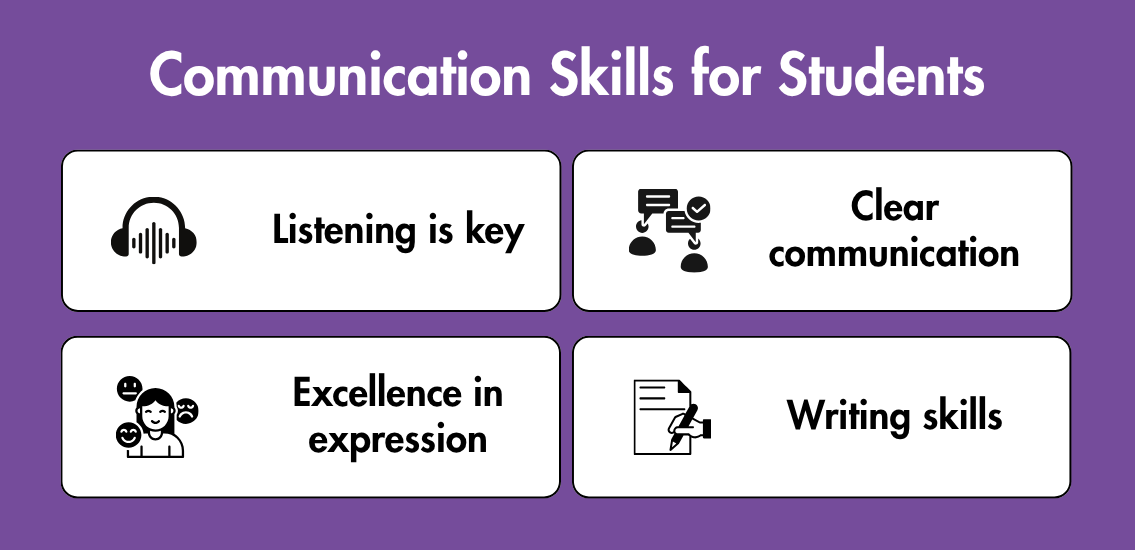
Listening is Key
Most of the population mistakenly believes that communicating is speaking. In reality, communicating starts with listening.
In TAIPS, students are evaluated on their listening skills through various methods from kindergarten. They include, group discussions, pair work, reflective sessions, and teaching by example.
When kids develop their listening skills, they can respond and talk appropriately and, most importantly, win the respect of their peers and teacher. They benefit socially and academically from this positivity and trust.
Clear Communication and Excellence in Expression
Expression and communication are skills which require dedication and discipline. Mastering these skills allows students to express their ideas and thoughts in an organized manner and helps them in becoming leaders.
Dedicated speaking opportunities in TAIPS helps in developing speaking skills at various levels like:
- Participation in school assemblies and other inter school activities
- Class debates and discussions
- Workshops for elocution and drama
Writing Skills
Writing is a skill for life. It helps us in articulating thoughts and ideas in a manner which is persuasive and/or clear. It helps us structuring our thoughts and processing our feelings. Writing skills are developed through practice.
There are a host of regular activities at TAIPS which help students in honing their writing skills. These activities include writing reports and summaries, taking part in group discussions and debates and doing reflective writing. Mentoring and peer reviews are an ongoing feature at TAIPS.
Tips for Parents and Teachers to Support At Home or At School
The influence on a child’s communication development at home is equal to that at school.
For Parents :
Converse with your children during dinner in a way that requires and encourages them to explain and/or expand upon their thoughts and ideas (beyond simple yes/no or rule out type responses)
Read with your children to enrich their command and use of various words.
Avoid interrupted or completed utterances, to allow children to verbally express themselves with their own command and use of various words.
For Teachers :
Teachers can make the development and use of written and/or oral expression during class activities, a way of life in their classrooms.
Teachers can engage children in discussions and provide them with regular opportunities to express themselves orally.
Teachers can develop children’s command and use of words by providing them with oral and/or written feedback on the expression and delivery of their thoughts, rather than the quality of the ideas expressed.
Teachers can encourage children to understand how to articulate ideas and thoughts using words, rather than relying on gestures or other aids.
Conclusion
A student who thinks clearly but cannot express those thoughts is operating at half capacity. The world rewards those who can speak, write, listen, and connect and these abilities are built, not inherited. At TAIPS, developing communication skills for students is not a once-a-term activity it is a daily, deliberate, and deeply valued part of every child’s education.