
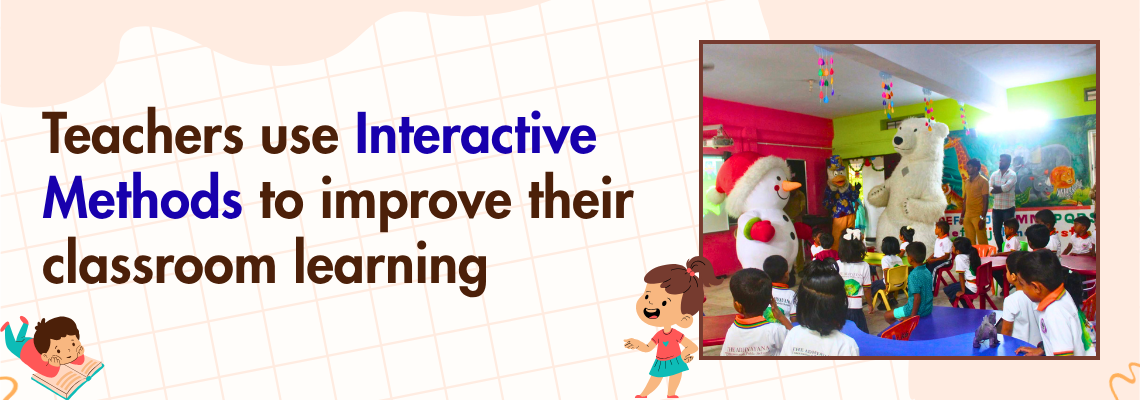
Modern classrooms are most effective when students are active participants, not passive listeners. In the interactive classroom, teachers turn classes into two-way learning experiences, with students asking questions, answering, discussing and applying ideas in real time.
An interactive classroom is a learning setting where instruction goes beyond a lecture. Teachers employ talk, images, exercises, questioning, group work and practical examples to assist pupils have a clearer understanding of subjects.
A major difficulty in many classes is that students can hear the material, but they don’t always engage with it. When learning becomes one-way, attention wanes and understanding weakens.
Teachers implement for Students
Teachers have strong yet easy ways to bring engagement into the classroom. The idea is to have learning be dynamic, but not be difficult.
Some practical ways include:
- Asking questions in the class, in short forms.
- In paired and small group conversations.
- Sharing real-life examples on the topic.
- Prompting students to communicate their ideas in their own terms.
- Classroom materials, graphics, board work.
- Quizzes, brief tasks and reflective activities
These strategies allow professors to verify for understanding while keeping pupils engaged. They also create a more open, student-friendly classroom.
Benefits to Students
There are a number of major benefits of interactive education for pupils.
- Improved communication abilities.
- Greater confidence in speaking and responding.
- Improved memory through engagement
- Increased interest in learning.
- Improved teamwork and social growth.
- Improved capacity to work independently to solve difficulties.
Students also are more at ease when they believe their opinions count. That feeling of involvement might lead to improved grades and a more pleasant attitude about school.
Practical Classroom:
In real classrooms, engagement does not always need sophisticated equipment.
- A teacher in a scientific class can make predictions prior to a demonstration.
- A language teacher can employ role-play to develop speaking abilities.
- A math instructor can use practice problems as brief group challenges.
- A social studies instructor could start with a conversation about a current occurrence.
- A value-based lesson includes reflection questions and student sharing.
These examples suggest that interactive learning can be simply included into ordinary instruction. The best way is when teachers use approaches according to the age, subject and comfort level of the students.
Classroom Education in TAIPS
Interactive teaching at TAIPS helps to create a learning environment where students are involved and teachers are able to guide them more effectively. A school that helps students become confident learners and courteous communicators emphasizes participation.
Interactive education is not simply a trendy trend, but a practical technique of improving the results of learning in the real classroom environment. Regular use of interactive approaches makes pupils more concentrated, confident and able. The concept of an interactive classroom aligns with a more powerful, smarter and entertaining educational experience for TAIPS