
The last few years have witnessed a major change in homeschooling in India, especially in metropolitan areas such as Bangalore, Pune, and Chennai, where a post-pandemic increase of around 30% has been recorded. As a consequence of the more flexible and customizable curriculum offered by homeschooling, Indian parents have moved away from the more traditional classroom-based schooling. Such EdTech-enabled homeschooling empowers children and families, as it allows them to choose their own educational path and not follow a state-mandated educational curriculum.
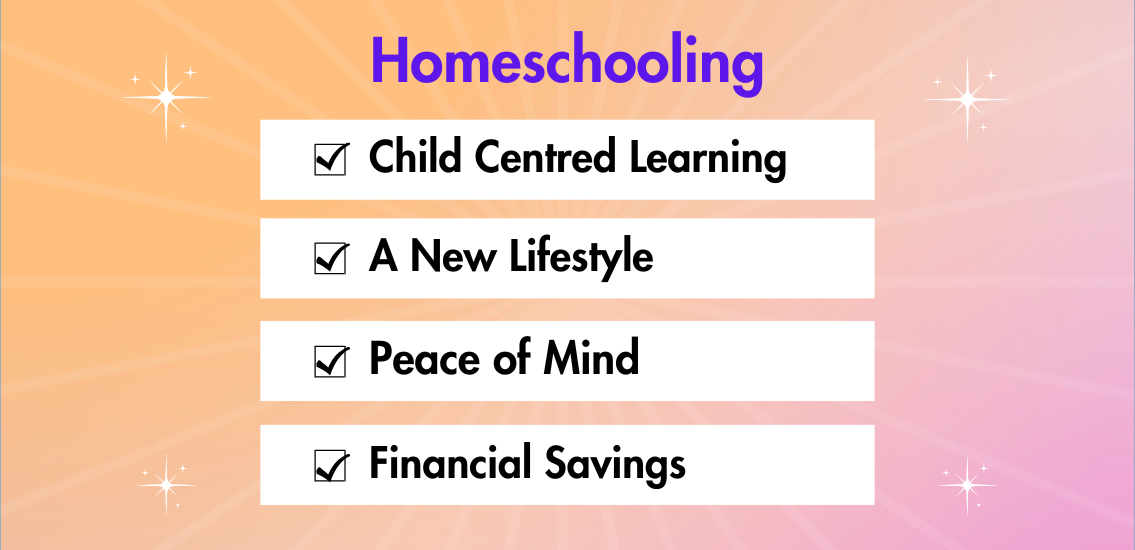
Child Centred Learning
Custom learning plans are not offered in traditional classroom schooling, and as a result, children are often put in positions where they are not being challenged or where they are being held back.
- Consequently, in a homeschooling model, parents are able to focus their curricular and instructional choices on the individual child.
- In this way, they can strengthen reading by going slowly and ensuring understanding and fluency before promoting to higher-level texts, and they can even move faster in the curriculum of math.
- Furthermore, learning in a more individualised way is aided by EdTech platforms such as BYJU’S and Khan Academy India, and they offer a more customized plan to each child. In a more recent study, the parents of 70% of those homeschooling children cited the flexibility of homeschooling as a primary reason.
A New Lifestyle
The post 2020 era has seen a transformation in both the traditional workplace and in the areas of technology. This transformation has enabled and encouraged more travel to take place, and Remote schooling and homeschooling create and embrace new educational opportunities for families.
- They provide flexibility in creating a learning yet fun environment, where education can take place anywhere in the world.
- They especially benefit families who travel more, are located in isolated regions of the globe, or have children and families of school age to educate.
- This is because it allows them to maintain a higher standard of education and to relieve themselves from the burden of relocating.
Benefits of Homeschooling
Besides fostering emotional connections through increased daily interaction with parents, parents also instil their values while weaving their lessons around family traditions (e.g., learning about budgeting and financial literacy, and learning about history through family holiday celebrations, such as Diwali). Further, homeschooling mitigates the impact of peer pressure and screen overuse, which studies show has a positive impact on children’s mental and emotional well-being.
Peace of Mind
- Many parents choose homeschooling to protect children from bullying, unsafe environments, and the distractions created by large classrooms.
- The home environment is especially beneficial to children with neurodiversity, anxiety andother related emotional issues.
- Homeschooling also benefits parents by allowing them to create customized sensory-focused learning experiences and adapt to the learning pace of children by providing more complex activities and projects.
Innovative Learning Opportunities
The predicted growth of EdTech in 2026 is expected to eliminate the barriers of access to top-level educational resources. Breakthroughs in technology also allow access to top-quality learning resources at little to no cost through platforms such as Duolingo and Scratch for coding. Additionally, through hybrid homeschooling models, students also receive the benefits of other co-curricular activities.
Financial Savings
- Compared to other schooling alternatives, homeschooling provides financial savings over time by minimizing the number of purchased school fees, uniforms, and transport (savings can be from ₹50,000 to 2 lakhs annually).
- The initial investment in homeschooling is also reduced by the use of reusable educational materials and educational programs.
- Additionally, children who have been home-schooled for 12 years show a higher degree of success in obtaining scholarships due to their competitive exam results.
- This also creates a financial incentive for parents due to the reduced financial cost of the child’s college education.Social Integration and Preparation for Reality
- The stereotypical portrayal of home-schooled children remains stuck in the past, as families are integrating into their communities through the use of Facebook groups, local co-ops, and community events.
- The volunteer and museum markets are, in fact, classrooms and entrepreneurial and public speaking skills proponents of experiential learning as opposed to the traditional rote learning classrooms.
Obstacles and Pragmatic Assessments
It is complicated and requires parents to possess the skills of an education planner, be organized, and, in certain instances, hold teaching credentials. The risk for burnout is real, so opt for tutoring and hybrid programs. Non-school-compliant education is a reality that has led to the requirement of an affidavit and proof of some type of board examination.
Explosion of Homeschooling in India Analytics
- Projected for 2026 to be 50,000+ families in India (10,000 families before 2020).
- Urban India has an increase of 65.
- Since 2023, NIOS has seen a double increase in enrolments.
Children are home-schooled, and parents become the primary educators, thus empowering the children to be prepared for an ever-changing world.
Are you interested in alternative options that are organized? Visit The Adhyayana International Public School (TAIPS), where we provide the best of both worlds, freedom and quality. Visit our CBSE School to find out more about our programs.