
Overview
Children develop social abilities through everyday experiences. Initiative development can begin during childhood through everyday classroom moments, group activities and small decisions students make independently. Building strong students early helps them become confident and responsible individuals who can think independently and work well with others. Essential Leadership Skills Every Student Should Develop and parents considering a holistic approach to education, understanding how is encouraged in daily learning activities provides a clearer view of how children can develop skills beyond textbooks and exams.
The Value of Confidence and Responsibility From a Young Age
Giving children opportunities to take responsibility from an early age can help them become more confident and capable. Simple activities, such as organizing a group task, leading a classroom activity, or representing their class, can improve communication, teamwork, empathy, and problem-solving skills. These qualities can support students throughout their education and later in their careers. Leadership is not something only a few people are born with students can develop it through regular practice, guidance, and real-life experiences.
Core Qualities Every Student Should Develop
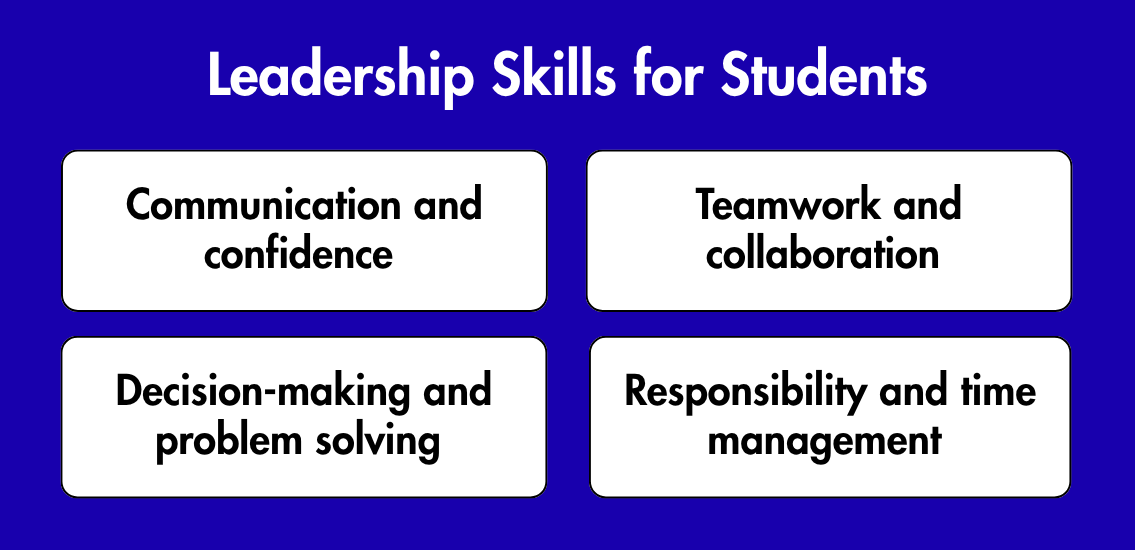
1)Communication and Confidence Speaking clearly, listening carefully, and sharing ideas with confidence are important leadership skills. Classroom discussions, presentations, and group projects help students improve through regular practice.
2)Teamwork and Collaboration Working with classmates toward a common goal teaches students to cooperate, share responsibilities, respect different opinions, and support one another.
3)Decision-Making and Problem-Solving Students face different situations during group activities, projects, and sports. These experiences help them make decisions, solve problems, and understand the results of their choices.
4)Responsibility and Time Management Completing assigned tasks, meeting deadlines, and managing responsibilities help students become more organizing and accountable. skills are developed through regular practice and real-life experiences at school. Activities such as student councils, sports teams, clubs, and group projects give students opportunities to take responsibility, work with others, make decisions, and learn from their mistakes. Schools that encourage this kind of participation help students grow into confident, capable leaders both in and outside the classroom.
Conclusion
Students can develop confidence, responsibility, and decision-making abilities through everyday learning experiences leadership plays an important role in helping Leadership Skills for Students through classroom activities, teamwork, sports, and other school experiences, students can gradually improve their communication, decision-making, and problem-solving abilities. they can be strengthened when students receive regular opportunities to participate, responsibility, and learn from their experiences. At TAIPS, students are encouraged to take part in a supportive learning environment that promotes personal growth and prepares them for the future.