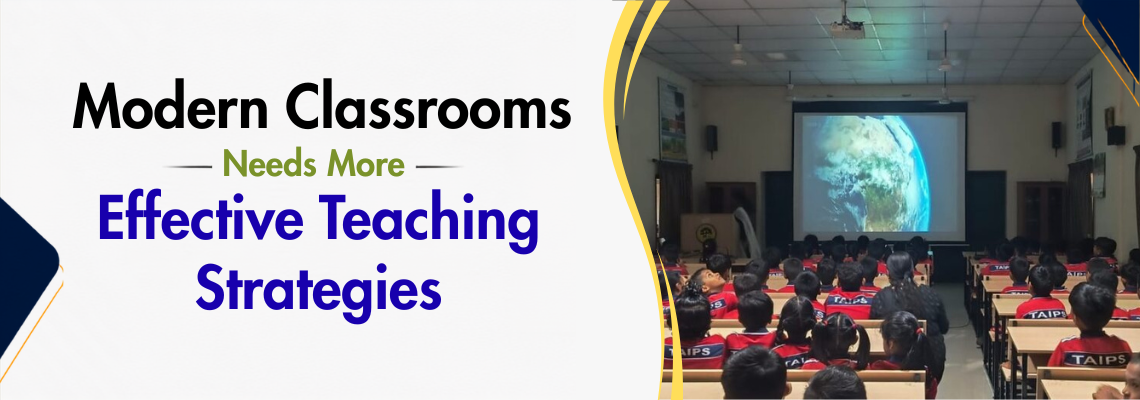
Modern classrooms are rapidly evolving, requiring educators to move beyond one-size-fits-all lectures to keep digital-native students actively engaged. Today’s learners are used to instant feedback, visual content, and interactive experiences, which means traditional “sit and listen” teaching often struggles to hold their attention. Research from university teaching consistently shows that classrooms built around active participation leads to stronger academic performance and better retention than lecture-heavy formats. For schools aiming to prepare students for a fast-changing world, adopting effective classroom teaching strategies is no longer optional, it is essential.
A Framework for Modern Classrooms
To bridge the gap between curriculum demands and student retention, teachers need practical, research-backed pedagogies. Here is an actionable framework designed to help educators optimize classroom dynamics, integrate smart technology with purpose, and elevate student learning outcomes from day one.
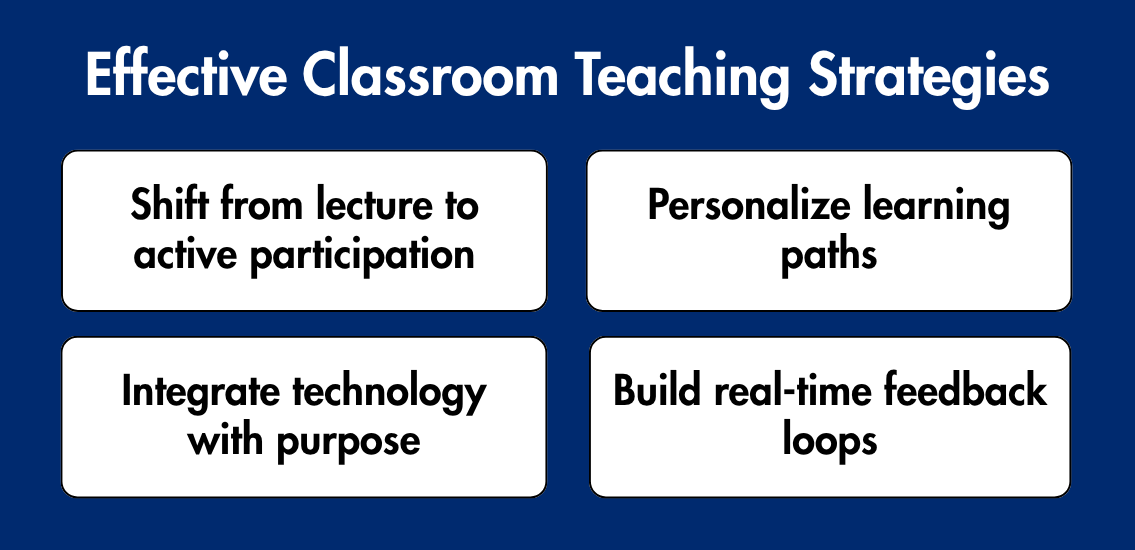
- Shift From Lecture to Active Participation
Replace long stretches of one-way instruction with discussions, think-pair-share activities, and short problem-solving tasks. Breaking lessons into smaller, interactive segments keeps attention spans intact and encourages deeper processing of new concepts.
- Personalize Learning Paths
Not every student learns at the same pace. Offering tiered assignments, flexible grouping, and choice-based tasks allows teachers to meet students where they are, rather than teaching to the middle of the class.
- Integrate Technology with Purpose
Smart boards, learning apps, and quiz tools are most effective when they serve a clear learning goal rather than acting as a novelty. Purposeful tech integration supports collaboration, instant feedback, and real-world application of concepts.
- Build Real-Time Feedback Loops
Quick formative checks a poll, a one-minute reflection, or a quick quiz, that help teachers spot gaps in understanding immediately, rather than waiting for a test at the end of the unit. This allows instruction to adapt in real time.
- Encourage Collaborative and Peer-Based Learning
Group projects, peer teaching, and structured discussions build communication skills alongside subject knowledge. Working with peers also helps students process material more deeply than passive listening alone.
Conclusion
As classrooms continue to evolve, teachers who move beyond one-size-fits-all lectures set their students up for stronger, more lasting learning outcomes. By combining active participation, purposeful technology, and real-time feedback, educators can meet digital-native learners exactly where they are. At TAIPS, this philosophy is reflected in how our educators and mentors are trained and supported, helping ensure that effective classroom teaching strategies remain central to every student’s academic journey building confident, capable learners at every stage.