Identifying a student’s unique strength is no longer based solely on their ability to solve a math problem or memorize a history date. The Theory of Multiple Intelligences has had a big impact on modern education systems, which now tend to look at intelligence in a more holistic way. This is how CBSE schools do it: they use ongoing and thorough assessment methods that go beyond the report card. Teachers can find out what kinds of abilities a child has by seeing how they work in groups, how well they do in creative arts, or how well they lead in sports. These talents could be analytical, creative, or interpersonal. The idea is to get away from the “one size fits all” concept and instead offer a personalized path that recognizes and nurtures each child’s innate talents.
Steps to Found and improve the unique strength of students:
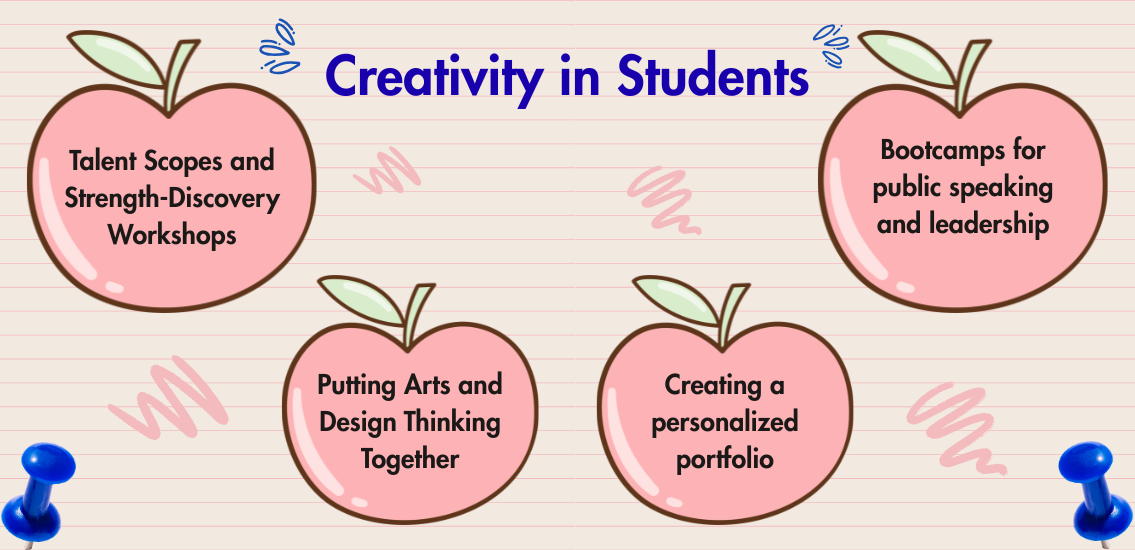
- Talent Scopes and Strength-Discovery Workshops
The first step is to provide a place where latent skills can come out. “Discovery Weeks” are a way for schools to let students try out different non-academic fields, such as robotics, classical dance, or cooking. Watching what activities, a student naturally gravitated toward during these rotations.Once a spark is recognized, the learner can be enrolled in specialist “Clubs” that provide additional training in that specific field.2. Putting Arts and Design Thinking (STEAM) Together
By transitioning from STEM (Science, Technology, Engineering, and Mathematics.) to STEAM (Science, Technology, Engineering, Arts, and Mathematics), schools give a platform for creative thinkers to succeed. Design-thinkingchallenges, in which students have to “build” or “draw” solutions to difficult problems, are a good way to find creative strengths.Programs like “Makerspace” let students use tools, software, and craft supplies to make their own ideas come to life, which helps them improve their creative skills.3. Bootcamps for public speaking and leadership
Not all strengths are artistic. Some students have the “people skills” that a future leader needs. Model United Nations (MUN) and student-led podcasts are great examples of this.
These programs show students who are naturally good at persuading, organizing, or understanding others.
These students are getting better at their natural leadership skills by getting a lot of coaching in communication and emotional intelligence (EQ).4. Creating a personalized portfolio
Schools can help students keep a “Success Portfolio” instead of just giving them a report card. This is a digital or physical collection of their best work, like a poem, a coding project, or a trophy for sports.
Regularly evaluating a student’s portfolio lets teachers and parents detect a regular pattern of interest or skill that might not show up in an exam. Setting explicit “Growth Goals” for the portfolio motivates students to push their boundaries and achieve “Mastery” in their chosen strength.
The true essence of modern education lies in moving beyond a standard curriculum to discover the hidden potential within every child. By implementing diverse discovery workshops, STEAM-based learning, and personalized portfolios, schools can transition from being mere academic centres to becoming centres of excellence. These structured programs are essential because they actively foster Creativity in Students, allowing them to explore new ideas and think outside the box. When a school successfully aligns its teaching methods with a child’s innate talents, it ensures that students are not just exam-ready, but life-ready.