
Key Takeaway
- Sports Management is a degree-based pathway.
- When choosing schools, consider academic quality, good coaching, quality facilities and flexible timings.
- Between Classes 6 and 10, students gain skills, qualifications and a competitive history to add to college applications.
- When choosing colleges, check accreditation, courses offered and placement opportunities.
- Careers include Sports Event Management, Marketing, Athlete Representation, Analysis and Leadership in Sports Academies.
- Visit schools, talk to coaches and request proof.
Overview and Importance
Sports Management means managing and running operations in sports, which involves planning, organising, leading and controlling. Sports Managers run tournaments, secure sponsors, manage locations, handle athlete contracts and develop leagues.
India’s sports sector is growing rapidly. Cricket and non-cricket leagues, private academies, sports business and sports journalism are all becoming popular. Many parents in Coimbatore and other cities now see Sports Management as a career programme, not just a hobby.
Key points
- Core functions: planning, organising, leading, controlling
- Responsibilities: tournaments, sponsorships, venues, contracts, leagues
- The growth of leagues, academies, business and media is creating demand
Who Is Eligible?
Being a sportsperson helps but is not required. People with business, communication and analytical skills can also do very well.
Key points
- Athletic background is an advantage, not a requirement
- Useful skills: business, communication, analysis
How to Get into Sports Management
Classes 6–10
- Train in 1 or 2 sports
- Take part in inter-school competitions
- Hold leadership roles such as house or team captain
Classes 11–12
- Choose a stream that suits the desired course (usually Commerce or Humanities, though many degrees accept other streams)
- Get involved in planning school events
Post 12th
- Do a degree or diploma in Sports Management, or a BBA/BA in Sports Management followed by an MBA or Sports Management degree
During College
- Take internships in sports media, events and leagues, or academies
Careers
- Marketing, Operations or Analytics roles (Associate, Executive, Manager), then specialise in Sports Management
Key points
- The pathway is staged: early sport and leadership, then the right stream, a degree, internships and a career
- Any stream may be acceptable, but check each course’s requirements
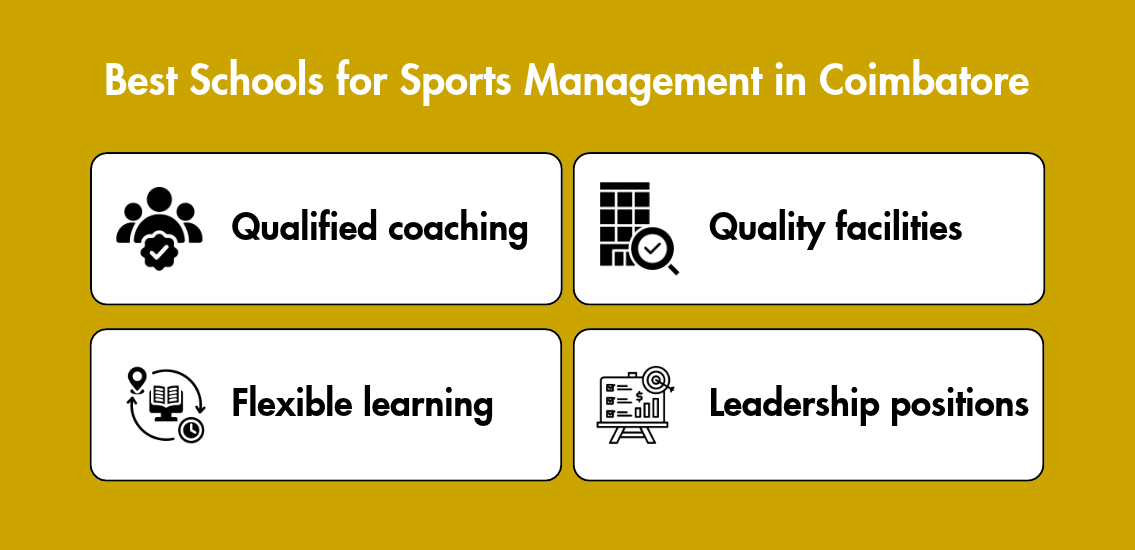
Best Schools for Sports Management in Coimbatore
There is no single quick answer. Instead, assess any school on the factors that build a sports career.
Qualified Coaching
- Check certification and experience
- Ask how often group sessions are held
Quality Facilities
- Enough playing areas, indoor facilities and safe equipment
Flexible Learning
- Protected learning time
- Flexible timings for training (before/after school, or missed lessons during tournaments)
Competitions
- Regular inter-school, district and state participation
Leadership Positions
- Student committees, event management and team captaincy
Athlete Health
- Injury prevention, healthy diet and mental resilience
Key points
- Few counsellors can advise beyond the “professional player” route, so look for career guidance that covers management roles too
Role of CBSE Schools for Sporty Students
( CBSE ) Central Board of Secondary Education is a nationally recognised board, so moving between cities and states is easier. National education policy drafts also promote PE and sports in schools, so CBSE students follow national policy trends.
Key points
- Easy transfers across cities and states
- National focus on PE and sports integration
How Does TAIPS Relate to This?
- Types of sports and training schedules
- Facilities (adequacy and condition)
- Achievements (event names and years)
- How academics are balanced with sports training
- Student-led sports committees
- Sports career counselling
What to Look for in Sports Management Colleges in Coimbatore
Filtering colleges against clear criteria helps your child decide whether to pursue sports management at all.
Curriculum
- Should cover sports marketing, event management, sports law and contracts, sports finance, facility management, sports psychology and analytics
- Verify by checking the syllabus
Industry Connections and Internships
- Find out which companies students have worked with, for how long and in what roles
Faculty and Student Testimonials
- Industry-experienced faculty are valuable
- Speak to current and past students about what they would change
Costs
- Total course fees, accommodation, travel and sports-specific scholarships
Key points
- Compare syllabus, internships, faculty, student feedback and total cost
Careers in Sports Management
- Sports Marketing
- Event/Tournament Management
- Athlete/Talent Management
- Sports Facility Management
- Data Analysis
- Sports Media/Communication
- Sports Administration
Research tip: Consider the city, required experience and salary. Check reliable sources such as the Ministry of Youth Affairs and Sports, Sports Authority of India and recent labour market reports.
Supporting Children from a Young Age
Things to do
- Keep academics strong to qualify for sports quota admissions
- Have your child keep certificates, scorecards and coaches’ names
- Encourage volunteering, event management, scorekeeping or team manager roles
- Ensure a healthy diet, enough sleep and rest for injury recovery
- Visit open events at sports colleges, exhibitions and local competitions
Alternative opportunities
- Skills gained in sports management are transferable to other fields. (This section is incomplete in the original draft, so you may want to add examples.)
FAQ
Which school in Coimbatore is best for studying sports management?
It depends on the school. Look for strong CBSE academic results, good sports facilities and support, and preparation for a university degree in sports management. Visit campuses and ask for evidence of results.
What age should children begin preparing?
Ideally in middle school (Classes 6–10), to build sporting skills, leadership and communication, which are valued in admissions.
What are the eligibility criteria?
Class 12 pass from any recognised board for undergraduate courses. Requirements vary, so check each institution’s website.
Do you have to be a professional athlete?
No. It helps, but business and management knowledge is also beneficial.
How do I choose the right institution?
Check approval status, teacher quality, student results and internships. Many degrees are university-affiliated, while others offer diplomas or short courses, so choose what fits your goals.