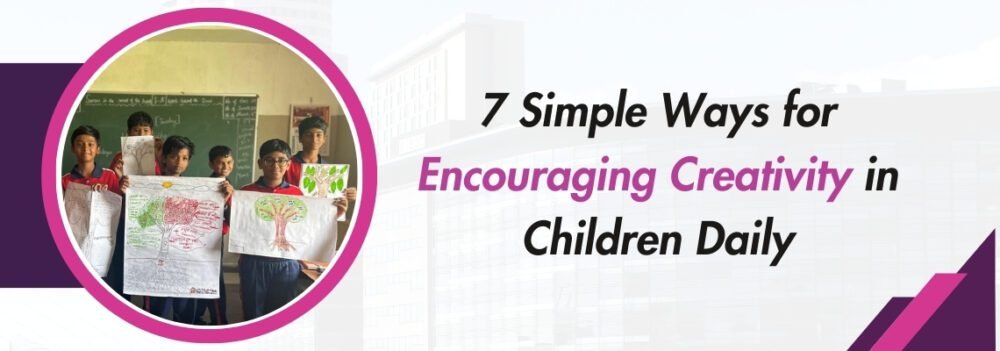
Imagine your kid lost in their own fantasies. Maybe they are building a castle with cushions. Perhaps they are using their imaginations to make up a story with a variety of different toys. Or perhaps they are portraying a rainbow on a paper plate using colours. When it comes to busy Indian homes and classrooms, it may be more difficult to nurture that spark. The good news is that promoting creativity in kids is not a resource-heavy job that requires hours of spare time. In fact, Indian parents and preschool and primary school teachers can practice these seven daily habits to encouraging creativity in children, confidence and problem-solving skills.
Why Encouraging Creativity in Children Matters Every Day
Daily, young minds in India have to contend with Activities and Anxieties. Creativity, on the other hand, mostly adds happiness and stress tolerance. Having teacher and parent guidance to promote and strengthen creativity explains why many kids are guided to understand that there are multiple ways to approach a problem, communicate their thoughts, and find solutions. It is not about having perfectly done art. It is more about the ability to explore your own ideas, make mistakes, and see things from a different perspective. When done regularly, daily routines can be transformed into special moments.

Key Strategies for Encouraging Creativity in Children
Make Time for Unstructured Play
Every day, make sure to dedicate at least 20 minutes of time where there are no rules aside from using your imagination, and toys that are safe to play with. These can include boxes and scarves. When children are left to their own devices to create games, cars and fortresses, it is best that you don’t direct them. Your job is to observe and engage with them by asking questions like “What happens next?” to practice storytelling and decision-making.
What If Questions
Make everyday moments special. While having breakfast, you can ask, “What would happen if this chapatti could fly?” or when at the park, you can ask, “What if trees could talk—what do you think they would say?” Asking what-if questions is a way to spark imagination without any chances or risks. It encourages children to think out loud and freely.
Celebrate the Journey
Proudly celebrate the messy drawings, use of colours, clay pots, and stories. Instead of saying, “That’s a beautiful piece of art,” say, “I love how you mixed those colours.” When there is less fear of failure, children are more willing to create and do things every single day. Frame great works of art at school or at home so you can help children build pride in their work.
Set up a Creativity Corner
Devote one shelf or box in the classroom or at home to a collection of craft materials: coloured paper, stickers, and foam shapes. Change the materials every week and add some natural materials or things you can recycle. Tell the children they can come any time and make things. There’s no need to assign a project.
Turn Chores into Fun Challenges
Help children see the imagination in everyday tasks. Cooking becomes art: “Can you arrange veggies like a flower?” Folding laundry can become a challenge to create a design: “Make stripes or shapes!” These chores help children to see that responsibility is everywhere and that responsibility can coexist with imagination.
Read and Retell with a Twist
Picture storybooks and folktales. Then, after reading, encourage kids to do a play version with puppets or toys. Maybe ask, “How do you think the monkey tricked the crocodile?” This is a nice way of mixing up added literacy and imagination. Great for preschool circle time or bedtime stories.
Nature as Your Daily Muse
How about going outside for “treasure hunts”? Look for leaves, tell a story about a pebble, or listen to the wind. You don’t have to collect anything; just look and listen. Plant leaves and clouds can tell stories too. You can imagine stories from any of the things you see.
Make It Happen in Your Home or Classroom
Begin with something small. Then decide to pick one idea and use it today. Ask your kids to use a family “creation jar” to describe what they have invented today, and put it in the jar. Use the class WhatsApp to send pictures to the grandparents, and you may see the shy kids turn into confident creators as you encourage them.
Which of these ideas do you think you can use first? You can share your answer in the comments; your answer may motivate another Indian parent or teacher.
At The Adhyayana International Public School (TAIPS), A Top CBSE School in Coimbatore, imagination and creativity are incorporated into the school day with the use of imaginative play-driven learning classrooms and projects. Come see how we help develop creativity in the kids, visit our CBSE School.