
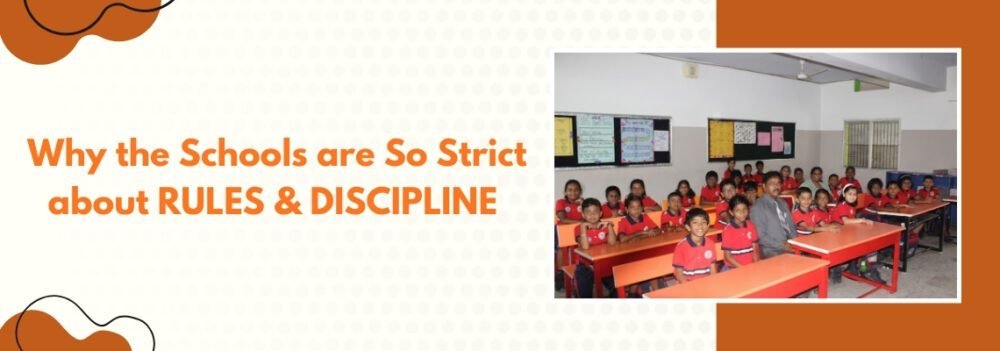
Why are schools so strict about uniform policies, homework, and arrival and dismissal times? For many Indian students, parents, and educators, these policies may appear to be arbitrary, but in fact, there are important reasons for having them. The purpose of such policies is to create a positive and productive educational environment and is therefore not an attempt to exercise arbitrary control. Classroom silence, for instance, is an important role in order to facilitate a productive learning environment and, in turn, relieve exam-related stress.
Safety Comes First Always.
- Nothing is more important than student safety.
- Once again, the absence of entry and exit rule is designed to limit student exposure to traffic incidents, which means always having a safe, supervised environment and a safe, predictable traffic environment.
- Parents appreciate the fact that their children are supervised and safe during school hours.
- All families appreciate these rules, and so do the students, as they help create a safe environment.
Preparing for Real-World Success
- After school, structure and free responsibility are needed in every workplace.
- Educators not only teach but also help instil a sense of responsibility in students, which is highly valued.
- Once again, the absence of entry and exit rules is designed to limit student exposure to traffic incidents.
Establishing Focus for Enhanced Learning
- A disciplined classroom allows all students to focus, free from disruptions.
- No talking during lessons allows students to hear all the material, resulting in a greater understanding.
- School uniforms eliminate distractions, enhancing the focus on academics.
- Strict rules reduce distractions in teachers’ large classrooms.
- The result? Improved academic performance for all students.
Fostering Character, Respect, and Discipline
- Rules instil respect for teachers, classmates, and school property.
- Sticking to a timetable fosters patience and helps kids learn to work together—both important in India’s socially diverse communities.
- Parents see this as instilling good character and family or community values.
- A classroom operates on trust, and teachers gain their students’ trust by administering rules fairly.
- This promotes a sense of collective responsibility and good habits.
Addressing India’s Schooling Challenges
- In Indian classrooms, teacher and student roles are reversed. Teachers act, and students comply.
- Strict rules help maintain order and are especially important when teachers and students are in a new location.
- Discipline during school events promotes order in the classroom or during meals.
- In the face of diverse nationalities and languages, rural or urban, disciplined parents help maintain order in the classroom.
- Every student, regardless of their background, must be given the chance.
Maintaining Flexibility within a Discipline Structure
- Students appreciate when discipline is adaptive, and good schools strive for this.
- Teachers understand when a student is unable to meet a deadline due to personal or family emergencies.
- Rules help prevent schoolwide disruptions, and teachers are always willing to talk about them.
- At home, parents’ routines now provide more structure in line with the school’s expectations.
- Together, they present a united front for child development.
At The Adhyayana International Public School (TAIPS), we take pride in our discipline as it fosters an environment where students are able to excel both academically and emotionally. Being one of the top schools in Coimbatore, we ensure our discipline is balanced with empathy in order to equip students with the challenges of the real world. Come and experience learning with discipline.