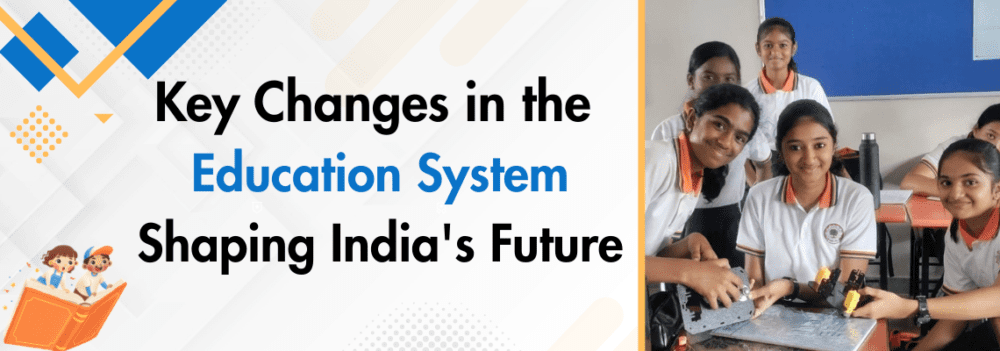
India’s education system is changing in a way. These changes will help the next generation get the skills they need for the economy. For teachers, parents and education policymakers, it’s crucial to know about changes in the education system. As we move into 2026, initiatives like the National Education Policy (NEP) 2020 are being implemented across the country. The focus is shifting from memorising facts to practical, inclusive and tech-driven education.
NEP 2020s Phased Rollout Gains Momentum
- New School Structure: The school education system now covers ages 3-18. It’s divided into four stages: Foundational, Preparatory, Middle and Secondary. This is to help students grow in a way.
- Expansion in 2026-27: Some states, like Goa, are extending the system to include grades. For example, they’ll include Grades 1-2 (Foundational), 4-5 (Preparatory), and 7-8 (Middle).

Key Changes
- Play-Based Learning: The focus is on fun activities in the years. This helps spark curiosity and development in young children.
- Mother Tongue Priority: Students will be taught in their home language up to Grade 5. This helps them understand better and take pride in their culture.
- Holistic Shift: There’s emphasis on exams and more on hands-on experiences. This helps students succeed in a rounded way.
CBSE Syllabus Reforms
- Competency-Based Learning: The 2025-26 updates, which will be implemented in 2026, focus on real-world skills, not memorisation.
- Twice-Yearly Exams: Class 10 boards will now have exams in February and April. This gives students chances to do well.
- Fairer Grading: A transparent 9-point grading scale rewards effort and progress equally.
New Opportunities
- Electives: Students can choose from new electives like Electronics & Hardware, Physical Activity Trainer and Design Thinking. These can help spark interest in careers early on.
- Smarter Assessments: Assessments will include questions and a clear evaluation. This helps build employability that’s on par with standards.
AI and Technology Integration
- AI from Early Grades: A mandatory Computational Thinking curriculum will start in 2026-27 for students in Class 3. This is being crafted by CBSE and IIT Madras.
- Schools Ready: Over 18,000 schools are getting ready to focus on ethics and practical AI uses beyond coding basics.
Digital Learning
- Digital Platforms: Platforms like DIKSHA, SWAYAM and PM e-VIDYA are making quality resources available to every corner of the country.
- Blended Learning: The future of learning is a mix of tools and classroom teaching. This prepares kids for tech-driven lives.
Vocational Flexibility
- Skills from Middle School: Students will learn coding, data science and entrepreneurship. These skills link studies to jobs.
- Flexible Education: There are entry and exit points and an Academic Bank of Credits. This allows for flexible educational paths.
Inclusive and Equitable Access for All
- Support for All: There are funds and zones to help disadvantaged groups thrive equally.
- Gender Inclusion: Extra resources are available to ensure girls. All students get fair chances.
- Goal: The goal of these changes in the education system is to make top-quality learning competitive and future-proof for everyone.
At The Adhyayana International Public School (TAIPS), a leading CBSE school in Coimbatore, these reforms are being embraced through student-centred programs. Teachers, parents and policymakers can discover how TAIPS leads the way by visiting their CBSE School.