
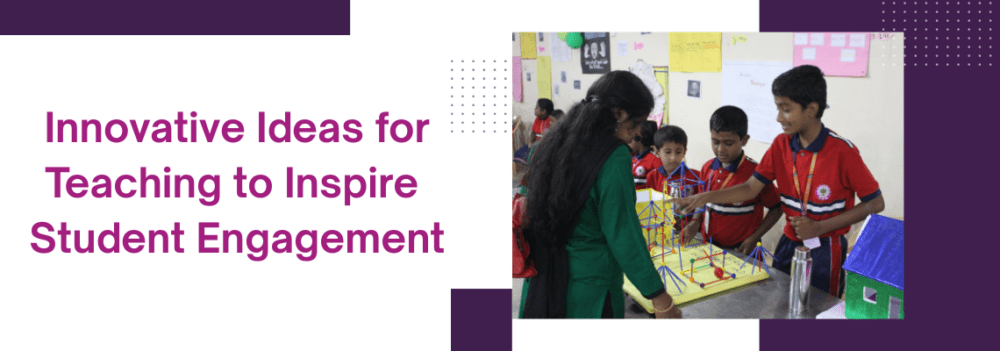
Imagine a peaceful classroom that suddenly gets filled with energy as kids run around constructing paper bridges out of newspapers, giggling as they engage in a physics challenge. Every hand in the room shoots up, and the most introverted kid in the room becomes a team leader. This is a daily occurrence in Indian classrooms when the teachers attempt innovative ideas for teaching that engage kids. Every Indian teacher has a diverse classroom, a fixed syllabus, and endless distractions around, and with that context, a few small adjustments to teaching techniques can transform a dry, boring lesson into an unforgettable experience that the students will remember forever, will help the students stay focused, and will increase the joy that the students get from school.
Why Innovative Ideas for Teaching Make a Difference
Old-style lecture captures only a handful of kids, while most of the kids want to get involved. Innovative ideas for teaching engage kids and make school fun to learn, like a game. From what I have witnessed in Indian school, kids who get excited about the class do way better on the tests, about 20-30% better, and they retain what they learn for much longer. In full classrooms, where the phones and the noise battle for attention, these innovations teach kids how to work for, think creatively, and solve the problems they will need for the jobs of the future. Teachers stop talking and start guiding the discovery and everyone is better off.
12 Innovative Ideas to Implement in Teaching Tomorrow
These innovations can be used in all classrooms, irrespective of the board and can be easily implemented:
- Story Circles: Students can start the lesson by telling family stories, and, if possible, related to the objectives of the lesson you are imparting. For e.g. while discussing the Independence of India, ask the children if they have grandparents whose stories they can share. This personal angle will grab the children’s attention.
- Reverse Classroom: Send children a video or a few key notes to revise before class via WhatsApp and use that class time to have a dialogue, do an activity, or have them work in groups. This way children are prepared and have the opportunity to work on a more advanced level during class.
- Gamified Chapter Quests: Divide sections of the syllabus into units that are sped up with the gamified scoring, and fun prizes. If children have to defeat a math ‘monster’ during the lesson, even the laziest of them will engage.
- Peer Teaching Power Pairs: Pair strong students with those who need a bit more help. If you move around the class to give support, they will all build their class confidence, and the stronger students will consolidate their knowledge further.
- Real-World Problem Missions: Assign homework tasks that require children to solve a real-life problem, e.g. design a water collection system for the school or poster a healthy snack. This will help children to appreciate that the knowledge gained in class has real application.
- Tech-Free Creation Days: Spend time away from screens, folding paper planes to understand the mechanics of flight, or acting out a village market to learn business. Illustrates that great ideas do not require technology.
- Mystery Question Walls: Implement a space where students can submit anonymous questions. Each day, randomly select a question to explore together. It will likely inspire quiet students to engage.
- Gallery Walks: Ask students to prepare quick poster presentations, then arrange them in a gallery. Students can review, and walk from one poster to another and leave feedback using sticky notes. A sneaky way to review without the threat of boredom.
- Future Career Role-Plays: Students assume the role of a real professional while completing a task. For example, in a science lesson, students could act as engineers and pitch a new gadget. In English, students could ‘report’ on a current event or vice versa for a ‘fake’ news event. This promotes real-world thinking.
- Choice Boards: Provide students a choice of 9 activities that demonstrate understanding – draw, rap, build an argument. Students take on a greater sense responsibility when they pick the activity.
- Succession Challenges: Each week, give one student the opportunity to plan the fun lesson for the beginning of the next class. It gives students a say and keeps things fresh.
- Reflection Rings: Sit in a circle at the end of class and go around one by one stating one positive aspect of the lesson and one area for improvement. This helps everyone feel heard.
A lesson can be transformed into the desired format instantaneously.

There’s no need to do radical changes to your entire lesson. Just a few steps can do the work.
- Step 1. Determine the Main Idea of the Lesson.
- Step 2. Imagine an activity that incorporates them when you are explaining the lesson.
- Step 3. Autonomy by them choosing how to demonstrate what they know, which technology to use, and how to form their groups.
- Step 4. Closure by asking students, “What surprised you?” and “What are you going to remember?”
Measure Wins and Level up Continuously
Forget the complicated charts:
- Count how many hands go up before and after (double is the aim).
- Ask, “Fun level 1-10 today?” and write it down.
- See if the homework starts coming back quicker and gets more questions.
- Extra win: When parents start calling to say thanks, you know its working.
At, The Adhyayana International Public School (TAIPS), is one of the Top CBSE schools in Coimbatore, where our teachers develop novel strategies for teaching daily, crafting classrooms filled with the wonder of curiosity that enables all children to excel. Witness innovation in practice at TAIPS – visit our CBSE School and be inspired!