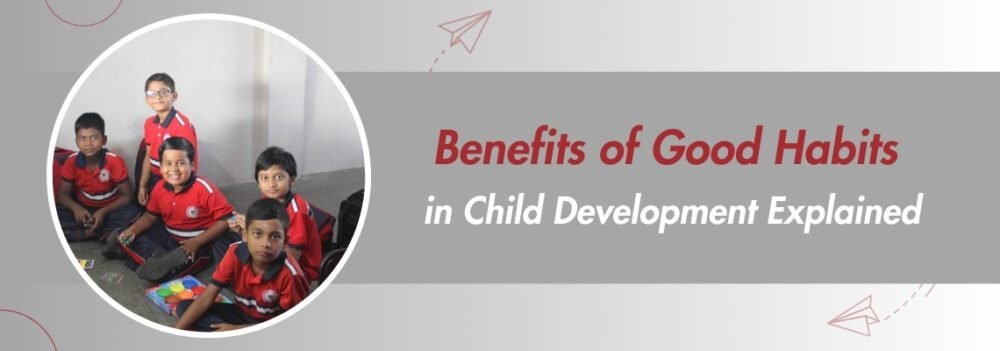
Imagine observing your child waking up on time, effortlessly organizing their room, and completing their homework before engaging in playtime. Such little actions can lead to developmental milestones. For Indian parents with school going age children and primary teachers, the everyday activities paired with the insights from child psychology and the power of productive habits can result in phenomenal outcomes. The benefits of good habits in child result in behavioural manifestations, which transform children into confident, responsible, and happy ready individuals. School and life beyond.

Key Benefits of Good Habits
Builds Self Discipline and Time Management
Having stronger self-control is one of the best benefits of good habits in child development. Children who learn to follow a routine, such as brushing their teeth, studying at a particular time, or organizing their books without adult supervision, learn to master time. This discipline is tremendously helpful at school because they handle assignments more efficiently, avoid last-minute rushes to complete the assignments, and maintain focus during their classes. These habits, over time, reduce stress and build a sense of accomplishment. These benefits also carry into the teenage years and adulthood.
Boosts Confidence and Independence
Good habits make children believe in themselves. Little things, like making their bed in the morning or packing their school bag, can teach responsibility and create an early win for the day. Teachers comment that these habits help children participate more in school, ask their classmates questions, and work well in groups. Parents love seeing their children take pride in these small achievements. This, in turn, boosts their confidence to tackle things like school exams or make new friends.
Improves Health and Energy Levels
Good habits like eating fruits, drinking water and sleeping early will improve how kids feel. Among the best things about how habits help children grow, better health is usually the biggest. Healthy kids take less sick days which helps them pay better attention in school. Kids who play outside and have fun active routines stay energized, in a better mood, and get sick less often which helps them do better in school and sports.
Improves Academic Achievement
Establishing good habits means a child will not have to exert extra effort to do well academically. Reading a little each day helps to develop a love for learning, and revision helps to keep lessons fresh. Teachers describe these children as faster learners, as they do their homework, and achieve test scores. For Indian parents, healthy early habits will help reduce their worry about board exam preparation later.
Develops Social Skills and Empathy
Giving children good habits helps them learn important social skills. Hearing children say “thank you” and “please,” and witnessing them greet adults, and share their toys, helps adults to see empathy and good social skills. In the classroom, these kids are the ones the best teammates, they fight less, and they are more liked and respected by teachers and other students. Good habits help children develop social intelligence, and keep stronger accompaniments and family relationships, and in the future, good habits help in relationships and careers.
Building Good Routines at Home and School
Starting with one good habit, like reading for 10 minutes, can make things manageable. Use praise and rewards to celebrate even the smallest efforts. Charts and stickers can make tracking progress fun for younger kids. Parents and teachers can coordinate, so both home and school are reinforcing the same good habits. Routines can take 21 days to become habits, but the benefits are for a lifetime.
At The Adhyayana International Public School (TAIPS), a top CBSE school in Coimbatore, Daily Life is integrated with the cultivation of good habits through systems, positive reinforcement, and the collaboration of teachers and parents. This allows each child to experience the benefits good habits have in the developmental process. Come and see for yourself at our CBSE School.