
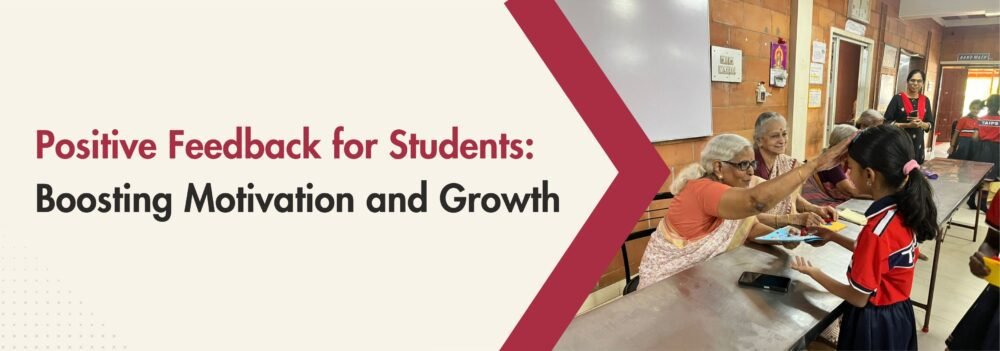
Consider a student who is afraid to raise their hand in fear that they may answer a question incorrectly. Now imagine that same child being able to answer any question and share their ideas in front of the class. What would have changed? The answer is simple: one small act of praise. The Indian educational system is able to incorporate this type of positive feedback for students, achieve a wide range of skills including confidence and determination. This is why the Indian educational system is able to help students become motivated and learn educational resiliency. When positive reinforcement is used by teachers in dialogue with students, parents, and educators, they are able to help students learn the most important lessons in self-confidence and motivated goal setting.

The Benefits of Positive Feedback for Students
Positive reinforcement is far more developed than most people even understand. Children who receive praise, particularly students in Indian culture, experience a shift in their emotional state that allows for greater engagement with the material at hand. Students experience greater emotional engagement while in a class that they feel is utilizing positive reinforcement praise for classroom participation. Children who receive positive reinforcement focus more on their success rather than their failures, ultimately reflecting a more positive mental state on their grade. Positive reinforcement praise allows teachers to create classroom environments in which children are able to feel and explore their curiosity, rather than fear environment the classroom.
The Benefits of positive feedback are something that is embraced, in theory, by many teachers. Here are several points that outline the benefits of provide praise to children to increase their confidence.
Self Confidence: Regular reinforcement helps children understand that have the ability to do something. Children are then willing to attempt more challenging projects. Confidence also projects a child from accepting a challenge in the first place, helping kids understand they are able to do something increases self-confidence while also motivating them to explore more complex tasks.
Improves Academic Performance: When students feel appreciated, they study more diligently and have better information retention.
Builds Resilience: Children learn that effort is what matters more than perfection and positive words help them to bounce back from setbacks.
Strengthens Relationships: Trust is built through praise which goes a long way between teachers, parents, and students.
Encourages Good Habits: Recognition of small daily efforts helps students to positively repeat behaviours.
How to Give Effective Positive Feedback
Quick Tip: Follow the 3 C’s – Clear, Concrete, and Connected.
- Instead of saying something vague, like Good Job, try to be more specific.
- I love how you explained that math problem, step by step, because your patience helped everyone understand.
- I appreciate how you assisted your classmate without being asked. That’s true leadership.
- I’ve noticed your handwriting improve so much this week. Your practice is paying off!
Daily Habits for Lasting Impact
Make positive feedback for students a natural part of your routine.
Morning Motivation: Start the day by giving them a genuine compliment to remember from the previous day.
Notebook Notes: Short encouraging messages in homework books help give positive feedback.
Parent Updates: Each week share one positive observation through WhatsApp or with a phone call.
Class Celebrations: During assembly, spotlight “effort stars”, rather than just the students who achieved the highest scores.
Self-Reflection: Guide students to recognize their progress by using journals.
Things to Not Do
- Even the best of intentions sometimes go wrong. Here are the points to avoid:
- Do not give praise that is not specific like “You’re so smart!” as this can create a fear of not being perfect all the time.
- Avoid any form of exaggeration. People will lose trust in your feedback and it will not be seen as genuine.
- Do not make comparisons of children to one another. “Why can’t you be like Ravi?” is an instant motivation killer.
- Offer some guidance along with the praise. Just praise and no suggestions will cap growth.
This can be done by school leaders training teachers on this encouragement, especially praise giving teachers, and providing an “Appreciation Wall” and parents can help this environment by having a family meal with everyone having to say one positive thing that happened to them during the day. Praise will empower children.
At The Adhyayana International Public School (TAIPS), a leading CBSE school in Coimbatore, is worth celebrating and we recognize members for making positive contributions to the school, uplifting their peers, and for celebrating the school community values and virtues. Contact us. You start seeing how we cultivate positive school community members.